EN
EN  SQ
SQ  FR
FR  IT
IT  ES
ES  DE
DE  PT
PT  DA
DA  HI
HI  AR
AR  PL
PL  NL
NL  HU
HU  FI
FI  NB
NB  SV
SV  LV
LV  HE
HE  CS
CS  ZH
ZH  RU
RU 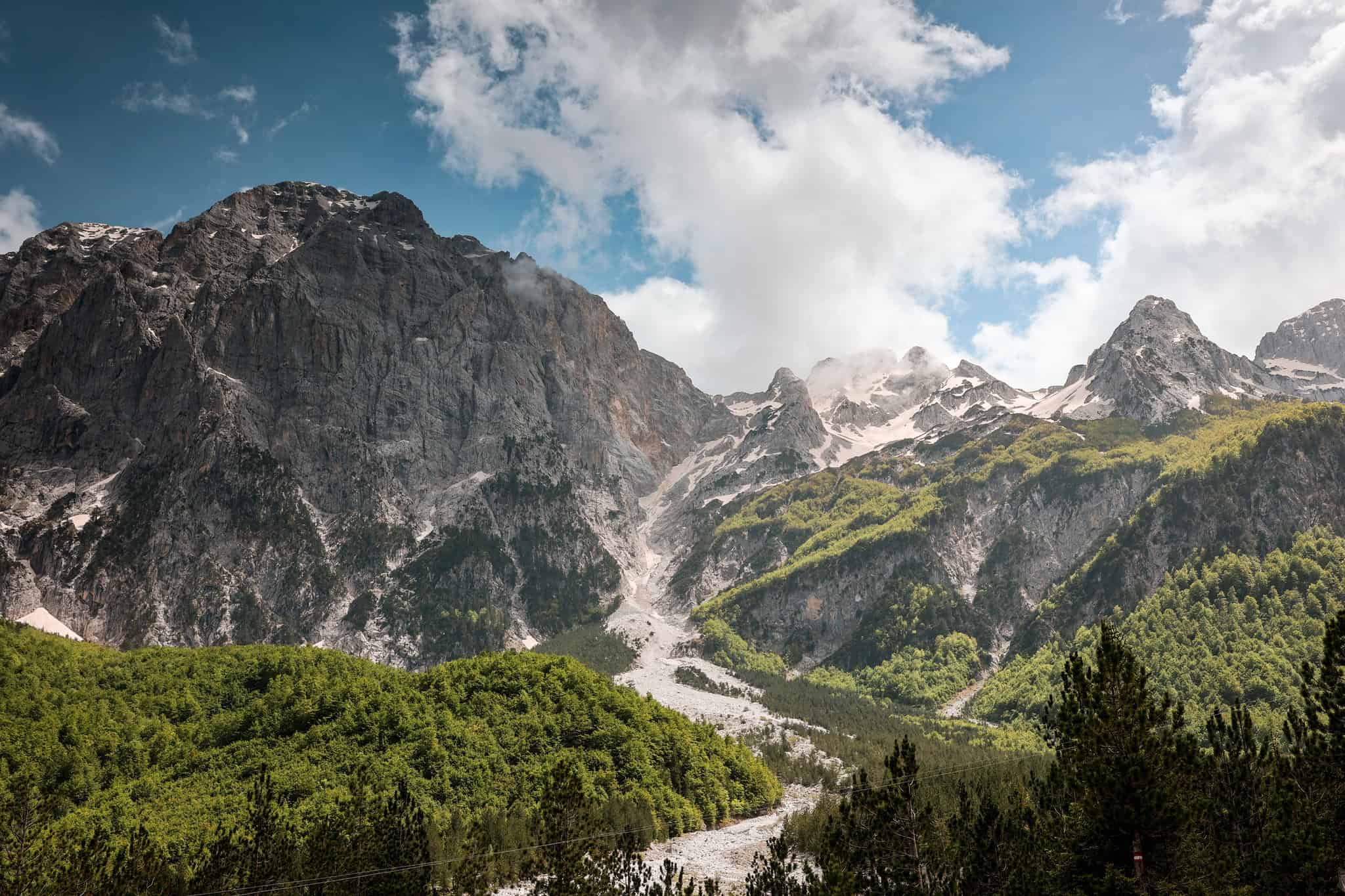
The Albanian Alps don’t look like the rest of Albania.
While the coast gets compared to Greece or Croatia, and Tirana a bustling capital in the Balkans, the mountains in the north feel completely separate. Resembling the Italian Dolomites, the Albanian Alps raw natural features – untouched for thousands of years.
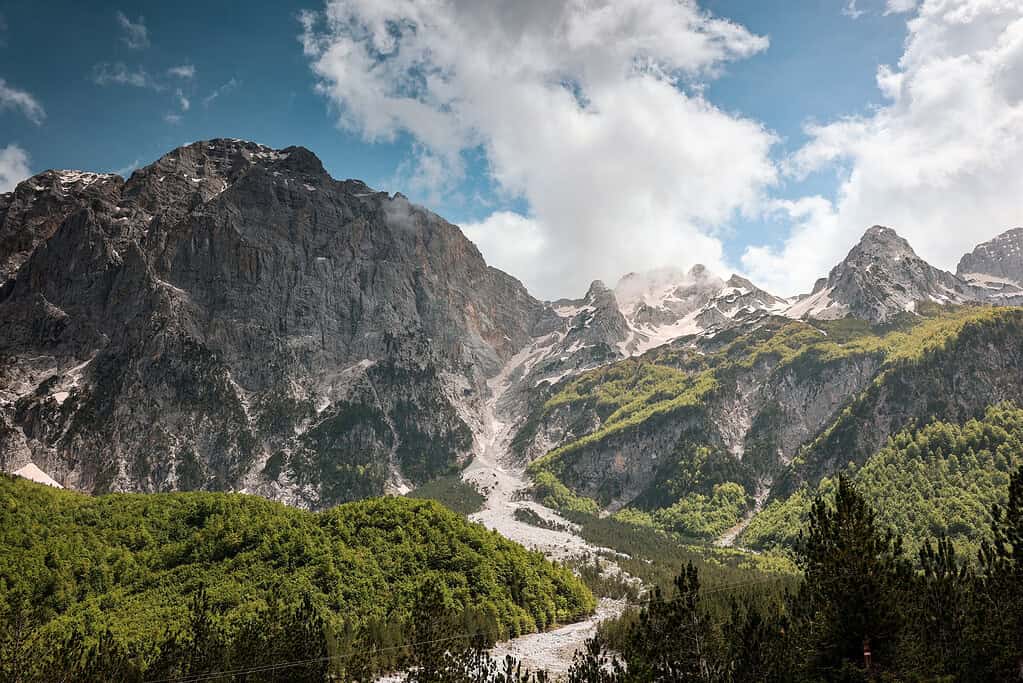
Limestone peaks rise above 2,500 meters. Traditional stone houses sit in high valleys where roads only arrived in the 1990s. Rivers run so clear you can see trout from the footbridges. And until recently, the only way in or out of some villages was on foot or horseback.
The region has three main destinations that most travelers hit: Komani Lake (the dramatic boat ride through a fjord-like canyon), Theth (a remote mountain village perfect for hiking), and Valbona (the heart of the Albanian Alps). You can visit one in a day trip, two in a long weekend, or all three in 4-5 days if you’re doing the classic hiking trail.
This guide covers how to get there, what to do, where to stay, and how to plan a trip accordingly. The Albanian Alps are stunning, but they’re not easy to navigate if you show up unprepared.
Geography of the Region
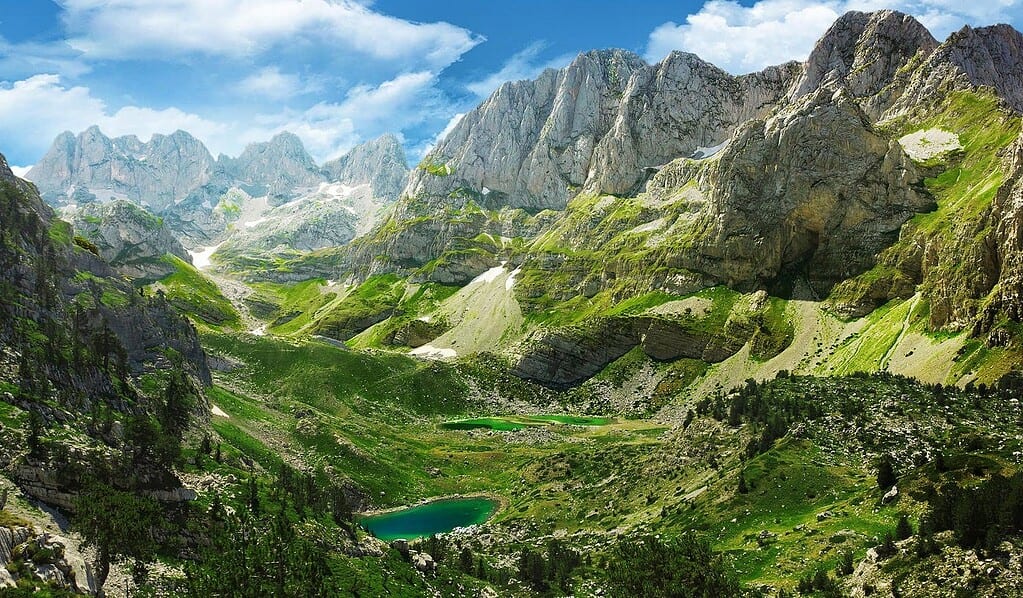
The Albanian Alps (also called Bjeshket e Nemuna in Albanian, or the Accursed Mountains in English) run along Albania’s northern border with Montenegro and Kosovo. The highest peaks reach 2,694 meters at Maja Jezerce.
Most of the mountain range is pure wilderness. Theth and Valbona sit in high valleys on opposite sides of a mountain ridge and they offer suitable accommodation for visitors and tourists. Valbona Pass sits between the villages at 1,795 meters, and you can cross it on foot if you’re hiking from one valley to the other.
Komani Lake on the other hand, is separate from the Alps. It is an artificial reservoir about an hour south of the mountains, but it serves as the gateway for most visitors. Most of the tourists book a boat ride through Komani Lake and then continue up the route. The boat ride through Komani Lake’s canyon is often combined with a visit to Theth or Valbona because they’re in the same general.
The region is quite remote, and planning accordingly matters. Roads are limited, some villages have no ATM or cell service, and transport runs on tight schedules that change based on demand and weather. But that remoteness is also the whole point of the trail.
Komani Lake: The Boat Ride Into the Fjord-Like Canyon
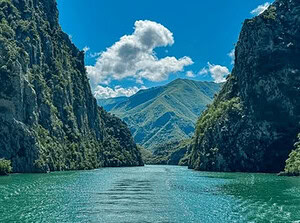
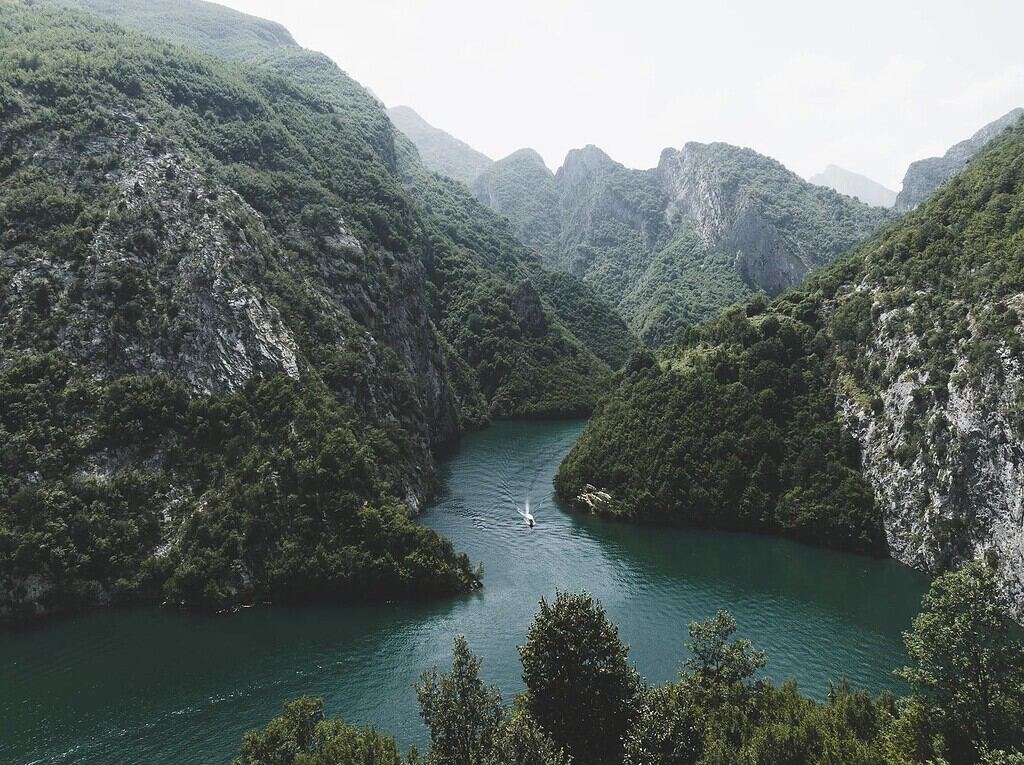
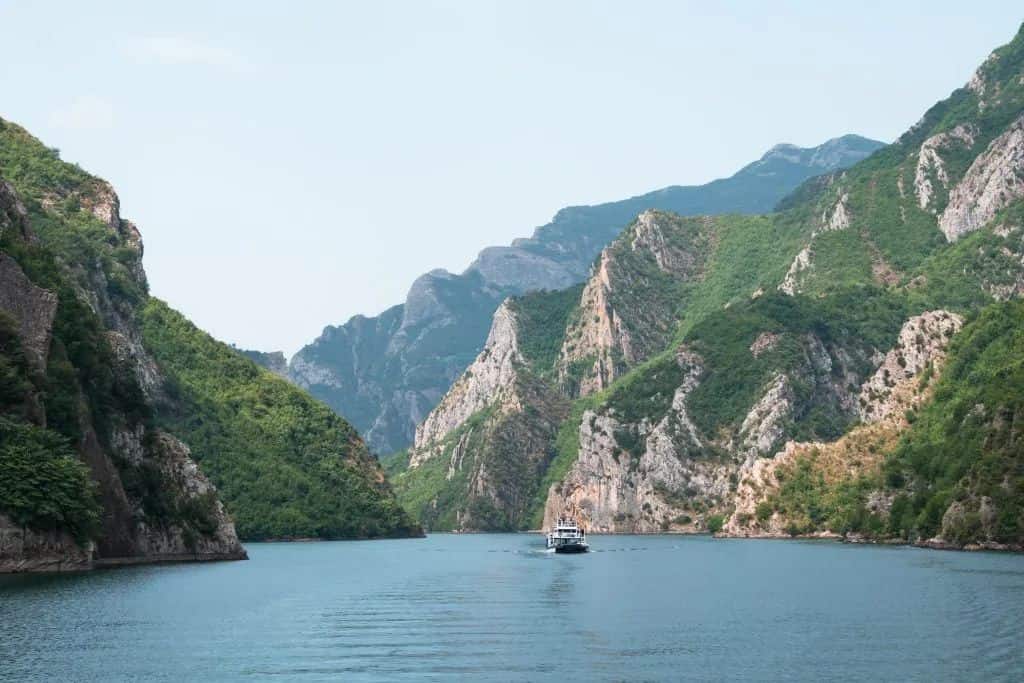
Even though geographically it is not a part of the Alps, Komani Lake is where most people start their Albanian Alps trip. The lake was created in 1978 when the Albanian communist government dammed the Drin River for hydroelectric power. The result was a 34-kilometer reservoir that wound through a narrow canyon with cliffs rising hundreds of meters on both sides. This decision shaped the landscape to look like the famous Norwegian fjords.
The standard route is a boat trip from Komani Lake to Shala River, a valley where the water is exceptionally clear and the mountains close in on three sides. The ride takes about 45 minutes by boat and passes through the most dramatic section of the canyon. Narrow canyon walls rise straight from the water and the lake turns dark blue on deeper sections.
Even though the scale of the lake isn’t quite as massive as Norway, that comparison is pretty accurate and the feeling is similar; you’re traveling through a mountain corridor where nature opens up the route and everything else has just adapted around it.
Most people do this as a day trip from Shkoder or Tirana. You take a bus to Komani Lake, book a boat trip, spend 4-5 hours at Shala River swimming and relaxing, then take the same boat and bus back the same day. The full day tour from Shkodra or Tirana takes 12-14 hours depending on where you start), but the scenery makes it worth the travel time.
This route connects to Valbona, so you can boat across the lake and then continue into the mountains. Although some travelers use the boat as transport rather than a tour, the Komani Lake to Shala River boat trip is the highlight of the trip and a boat tour is always recommended.
The boat tours operate from mid-April through mid-October. Outside that window, weather becomes too unpredictable and most facilities at Shala River close for winter.
Theth: The Mountain Village That Looks Forgotten by Time Itself
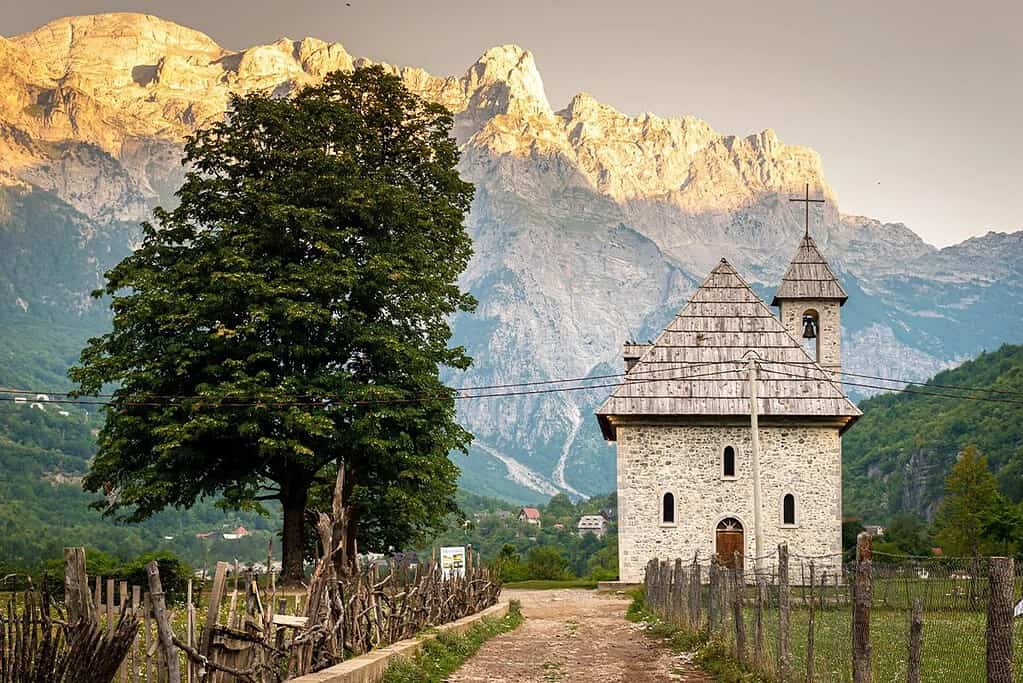
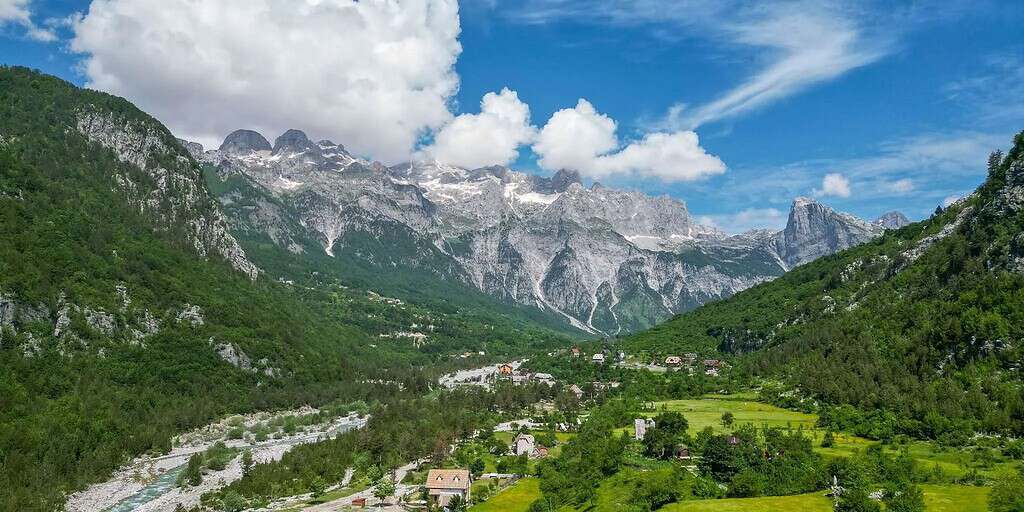
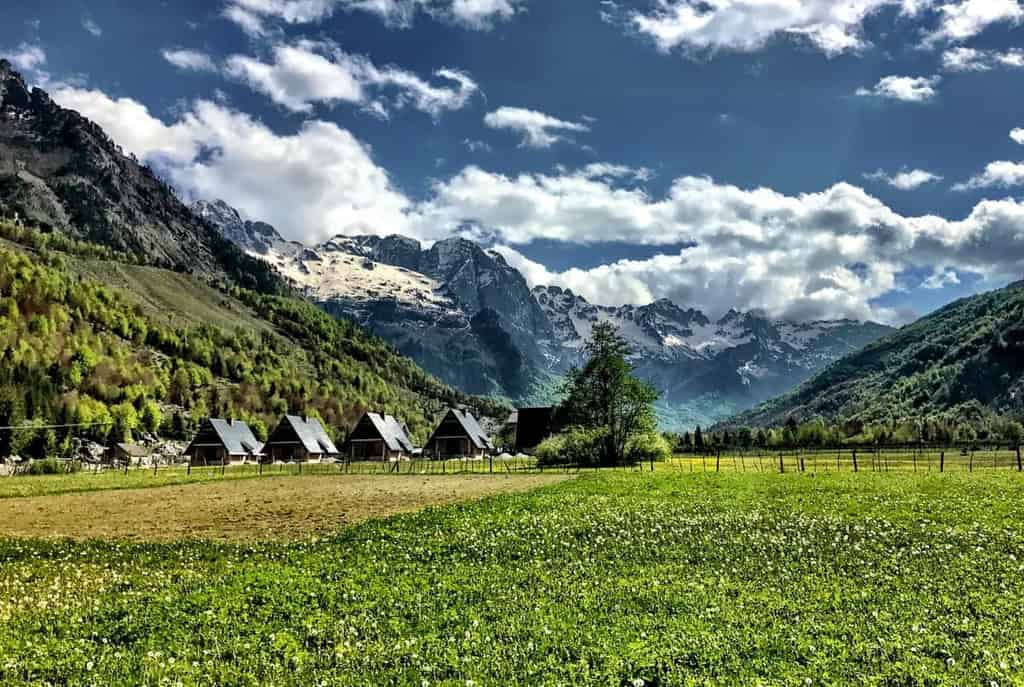
Theth sits at 900 meters elevation in a valley surrounded by peaks that top 2,500 meters. The village itself is a scattered collection of traditional stone houses, guesthouses, a small church, and a historical tower that was used during Albania’s blood feud era.
But getting there is only half of the experience. The road from Shkoder climbs through hills, crosses a mountain pass where you can see peaks stretching in all directions, then drops into the valley on a series of switchbacks that were only paved a few years ago. The drive takes 2.5-3 hours, and every kilometer looks different; olive groves giving way to pine forest, then alpine meadows, then bare rock near the pass.
The village of Theth has no ATMs, cell service is limited, and until recently had no reliable electricity. Generators provided power a few hours a day. Now there’s a micro-hydro plant that gives the village consistent power, but the infrastructure is still basic. However, this isn’t a complaint – it’s the whole point of the trip. Theth exists in a space between traditional mountain life and modern tourism, and most visitors appreciate that it hasn’t been completely transformed yet.
The main activities are hiking and walking around the valley. The most popular hike goes to the Blue Eye, a natural spring where ice-cold water bubbles up into a deep blue pool. The hike takes about 45 minutes each way from the village center, following a dirt road through the valley with mountains on both sides. You can swim in the Blue Eye if you’re brave enough to handle water that’s around 8-10°C year-round.
From the Blue Eye, you can continue another 30-40 minutes to Grunas Waterfall, which drops about 30 meters into a gorge. The trail gets rougher here but it’s manageable for anyone with decent fitness and proper gear.
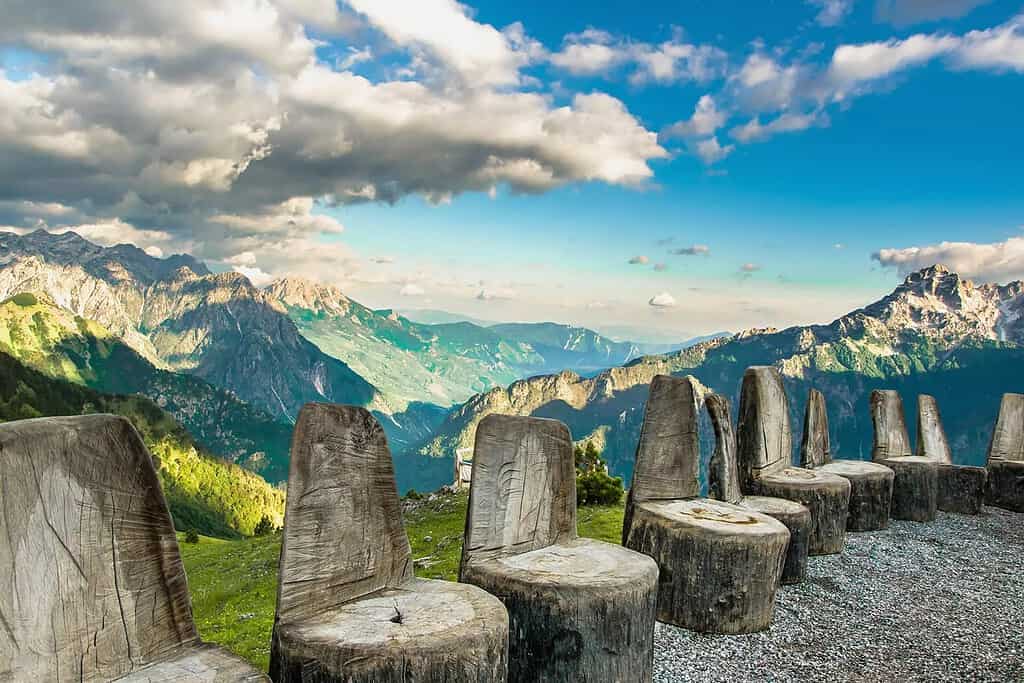
The other major hike from Theth is the trail to Valbona, which takes 6-8 hours and crosses the Valbona Pass at 1,795 meters. This is one of the best day hikes in the Balkans. You start in Theth valley, climb through beech and pine forest, emerge above treeline where the views open up to peaks in every direction, cross the pass, and descend into Valbona valley on the other side. The trail is well-marked and you’ll probably see other hikers, but it’s still a serious mountain hike with significant elevation gain and exposure. Most people hire a guide or at least arrange for their luggage to be transported by car so they only carry a small backpack.
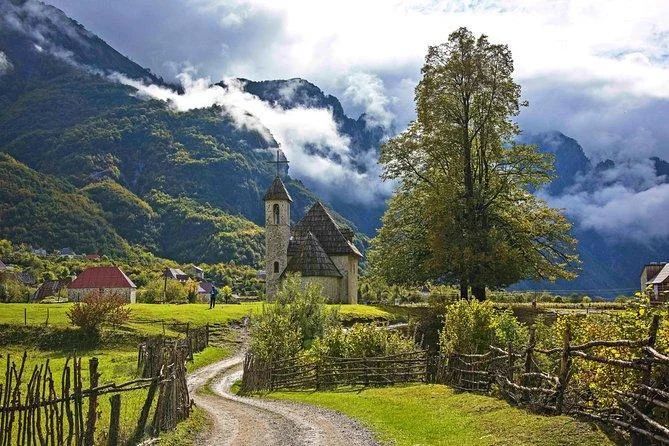
Accommodation in Theth is in guesthouses run by local families. Rooms are simple; bed, shared bathroom and no frills – but the experience is staying with people who’ve lived in this valley for generations. The guesthouses include breakfast and dinner, and you can firsthandedly experience the local dishes and generous hospitality.
The village has a few restaurants and cafes if you’re not eating at your guesthouse, but don’t expect menus with 50 options. You get what’s available that day, which is usually some combination of grilled meat, soup, salad, and bread.
Theth works best as a 2-3 night stop. One night feels rushed and two nights allow you to do a shorter hike the next day. Three nights is for people who want to slow down, do some longer hikes, or just sit and stare at the mountains.
Valbona: The Quieter Valley
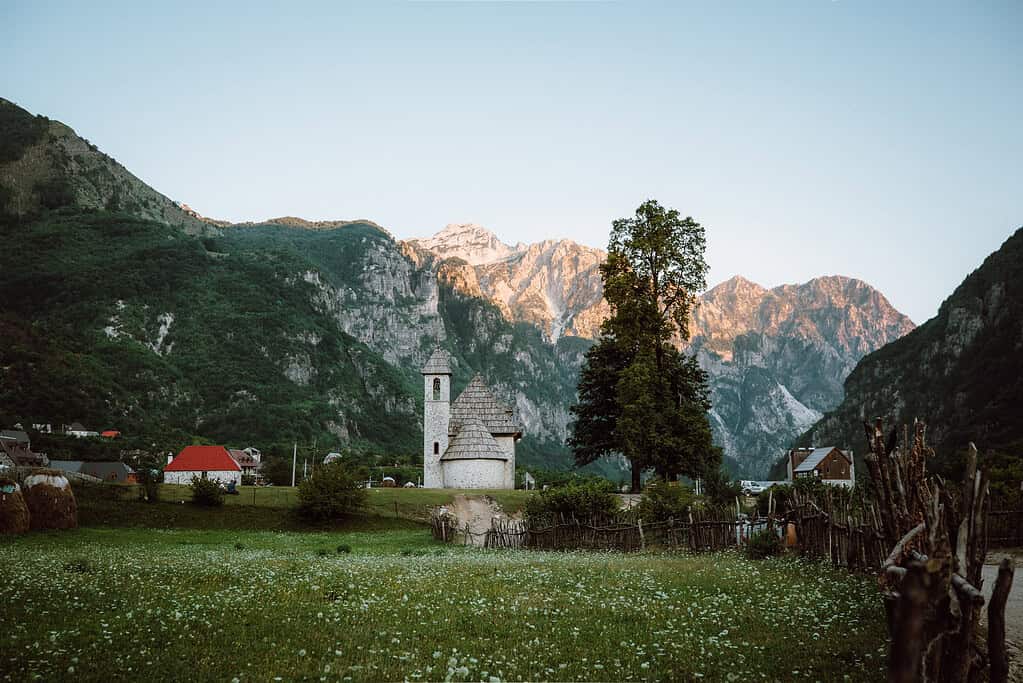
Valbona is often described as “Theth’s quieter cousin,” which is both accurate and slightly unfair. It’s quieter because it’s harder to reach, not because there’s less to see.
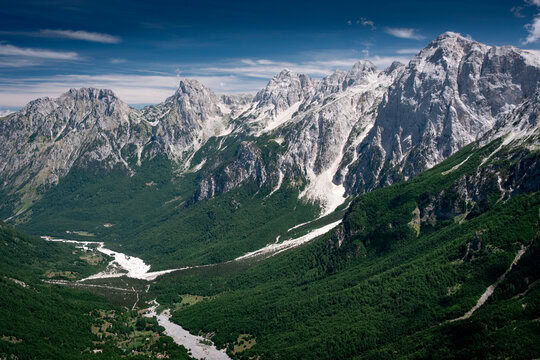
The valley runs north-south, flanked by some of the highest peaks in the Albanian Alps. The Valbona River cuts through the middle, crystal-clear and cold enough that you can stick your head in on a hot day and instantly regret it. The valley floor is mostly meadows and scattered houses, with forest climbing the lower slopes and bare rock higher up.
Getting to Valbona requires either a long drive or a combination of ferry and minibus. The driving route from Shkoder goes around the mountains via Bajram Curri – about 5-6 hours total on roads that range from decent highway to rough mountain track. Most people take the ferry across Komani Lake from the terminal to Fierze, then catch a minibus or taxi from Fierze to Valbona, about 1 hour away.
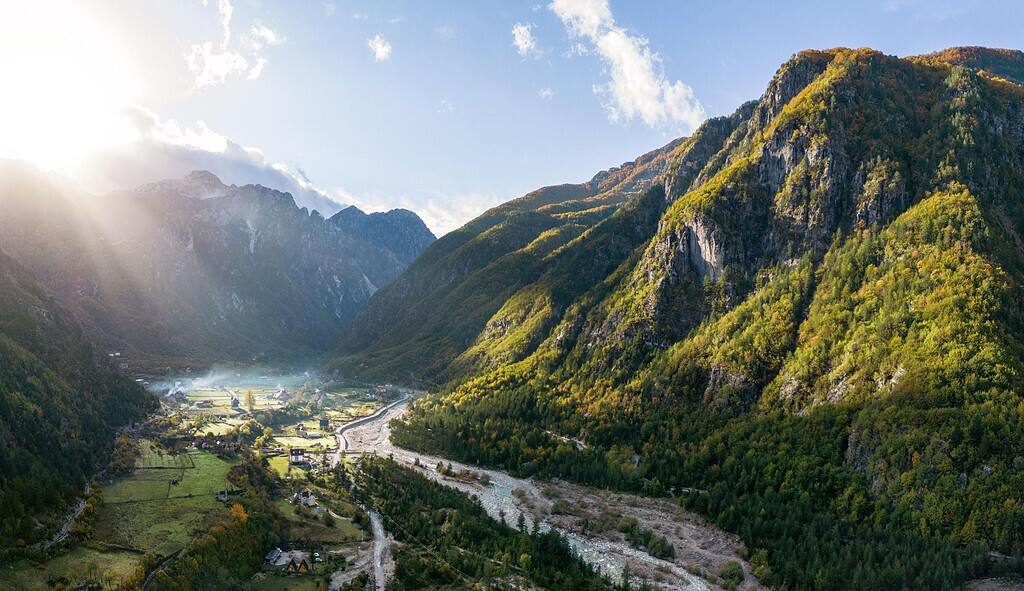
The valley has the same guesthouse setup as Theth – family-run places where meals are included and the hospitality is generous. The guesthouses in Valbona tend to be slightly newer and better-maintained because the valley got electricity and better road access a few years before Theth did, but the experience is quite similar.
Hiking is the main activity. Day hikes from Valbona include trails to mountain lakes, viewpoints overlooking the valley, and routes that connect to the Peaks of the Balkans trail (a long-distance trek that crosses Albania, Kosovo, and Montenegro). The most popular hike is to Rragam, a high plateau with views of the surrounding peaks.
The Valbona to Theth hike is the same trail from the other direction. Starting from Valbona means you climb first thing in the morning when you’re fresh, cross the pass around midday, then descend into Theth in the afternoon. Most people prefer this direction because the climb out of Valbona is steadier and less steep than the climb out of Theth.
The valley works best as a 3 night stop if you want to experience the best of it. Most visitors do the loop: Shkoder – Theth (2 nights) – Hike to Valbona (1 night) – Fierze ferry – Shkoder.
Planning Your Albanian Alps Trip
The logistics of visiting the Albanian Alps aren’t complicated, but they do require some advance planning. In peak season (July and August), transport and guesthouses fill up fast.
- How Many Days You Need
If you’re only visiting Komani Lake and Shala River as a day trip from Shkoder or Tirana, you need one full day. Leave early (6:30 AM from Shkoder and 5:30 from Tirana), return late (5:00-7:30 PM), and you’ll have seen the highlights of the tour.
If you want to add Theth, you need at least 3-4 days. One day to travel from Shkoder to Theth, 1-2 days in Theth for hiking, one day to return to Shkoder or continue to Valbona.
The full loop includes: Komani Lake – Theth – Valbona (takes 5-7 days if you’re not rushing). You can cut it into 4 days if you’re moving fast, or stretch it to a week if you want rest days and longer hikes.
- When to Go
The season for the Albanian Alps is from May through September, with slight variations depending on what you’re doing.
Komani Lake boat tours start around April 15 and run through mid-October. The roads to Theth and Valbona are usually open by early May. However, snow can linger at the Valbona Pass until late May or early June. If you’re planning to hike from Theth to Valbona in May, check conditions with guesthouses first.
July and August are the busiest months. The weather is warm, all facilities are open, and the trails are most crowded with other hikers. Guesthouses fill up, minibuses run regularly, and everything operates on a predictable schedule.
June and September are the ideal months to do the tour. June has the advantage of green landscapes, wildflowers, and fewer tourists. September has warmer water temperatures, beautiful autumn light, and less crowds. Both months have the risk of occasional rain, but the weather is generally stable.
During May and October the weather can be unpredictable. Sometimes it’s warm and sunny, other years it’s cold and rainy.
Winter (November through March) is off-limits unless you’re a serious mountaineer with winter climbing experience. The roads to Theth close when snow hits by late Novembe. Guesthouses shut down, and the mountains are dangerous without proper equipment and skills.
- Where to Base Yourself
Most people base themselves in Shkoder and do day trips or multi-day excursions from there. Shkoder has the most hotels, restaurants, and infrastructure. It’s the biggest city near Komani Lake, around 70 kilometers, where the tour begins.
The alternative is to base yourself in Tirana and do Komani Lake as a full day trip. If you want to visit Theth or Valbona, you’d need to move to Shkoder.
Some travelers stay overnight in guesthouses in Theth or Valbona and treat Shkoder as the transit hub rather than the base. This works well if you prefer waking up in the mountains rather than driving in from the city each day.
- Transport Options
Getting around the Albanian Alps requires a combination of buses, minibuses, taxis, boats, and occasionally your feet.
– Shkoder to Shala River via Komani Lake: Most travelers book a day tour that includes bus transport and boat ride to Shala River.
– Shkoder to Theth: Minibuses leave Shkoder around 6:30 AM and cost €10-15 per person. The ride takes 2.5-3 hours. Guesthouses in Shkoder can arrange this, or you can hire a private taxi which works best for small groups.
– Komani Lake to Fierze: Ferries and boats run daily during the season. However, boats are faster and allow for some relaxing time at Shala River.
– Fierze to Valbona: Minibuses or shared taxis run when the ferry arrives. The drive takes around 1 hour.
– Theth to Valbona: This is the main route for the hiking trail.
- Money and Practicalities
– There are no ATMs in Theth or Valbona. Withdraw cash in Shkoder before heading towards the mountains. Most guesthouses prefer cash (Albanian Lek or Euros).
– Cell phone service is weak or nonexistent in the valleys. Download offline maps before you leave Shkoder. The mountains are not the place to rely on Google Maps with live data.
– Mornings and evenings are cool even in the summer. If you’re hiking, bring a rain jacket and warm clothes regardless of the weather forecast as mountain weather changes fast.
– Water is safe to drink in the villages. The springs and rivers in the Albanian Alps are some of the cleanest in Europe.
– Bring a headlamp if you’re staying in guesthouses. Power is reliable now but it’s still useful for navigating at night.
What to Pack for the Albanian Alps
The gear you need depends on whether you’re doing the Komani Lake day trip, staying in guesthouses, or hiking the Theth-Valbona trail.
For Komani Lake to Shala River full day trip:
- Swimsuit and towel
- Water shoes
- Sunscreen, hat, sunglasses
- Light jacket for the boat ride
- Cash for lunch
- Water bottle
Staying in Theth or Valbona guesthouses:
- Everything above, plus
- Comfortable walking shoes
- Warm clothes to wear in the morning or during the night
Hiking Theth to Valbona:
- Good hiking boots
- Backpack
- 2-3 liters of water capacity
- Snacks and lunch
- Rain jacket
- Warm clothes
- Sun protection
- Basic first aid kit
- Optional trekking poles
Don’t bring more than you need. The less you carry, the more you’ll enjoy the hike.
Is the Albanian Alps Worth the Effort?
Hiking the Albanian Alps requires careful planning and logistical coordination. Roads are rougher, transport is less frequent, and you need to be comfortable with basic accommodation and limited infrastructure.
But if you’re the type of traveler who prefers mountains over beaches, traditional villages over resort hotels, and hiking trails over museum tours, the Albanian Alps deliver something rare in modern Europe: a region that still feels genuinely remote.
No crowds at viewpoints and no overpaying for food in fancy restaurants. You’re staying with local families in stone houses where tourism arrived within their lifetime. You’re eating dinners where the meat was raised in the valley and the vegetables came from the garden behind the house.
The landscapes are spectacular in an understated way. The boat ride through Komani Lake gives you the fjord experience without flying to Norway. The hike from Theth to Valbona crosses terrain that feels like it hasn’t changed in centuries.
Is it worth the effort? If you’re already in Albania and have 3-5 days to spare, absolutely. If you’re flying to Albania specifically for the mountains, plan at least a week ahead. This way you can do the full loop without rushing.
Ready to explore the Albanian Alps?
Most travelers start with the Komani Lake to Shala River boat tour from Shkoder or Tirana. North Albania Boat operates daily tours with modern boats, city pick-up, and certified drivers.
Book Your Komani Lake Boat TourRelated guides: