NL
NL  EN
EN  SQ
SQ  FR
FR  IT
IT  ES
ES  DE
DE  PT
PT  DA
DA  HI
HI  AR
AR  PL
PL  HU
HU  FI
FI  NB
NB  SV
SV  LV
LV  HE
HE  CS
CS  ZH
ZH  RU
RU 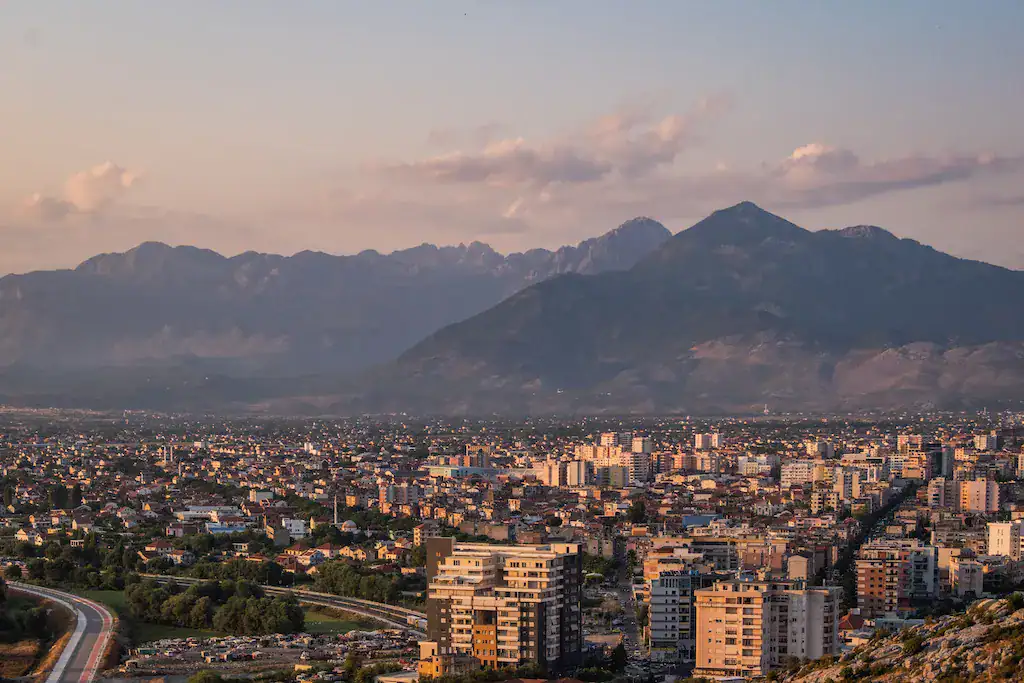
Most travelers treat Shkoder as a place to sleep before the mountains. They arrive late, leave at dawn, and miss the point. This is one of the easiest cities in Albania to fall for: flat, walkable, full of bicycles, with a hilltop castle, a lively pedestrian street, and a lake on its doorstep. Everything sits close together, so one unhurried day is enough to see the best of it.
We start our Shala River tours here every morning of the season, so this is the city we know best. This guide covers the things to do in Shkoder, with the practical details for each: what it costs, how long it takes, and how to get there.
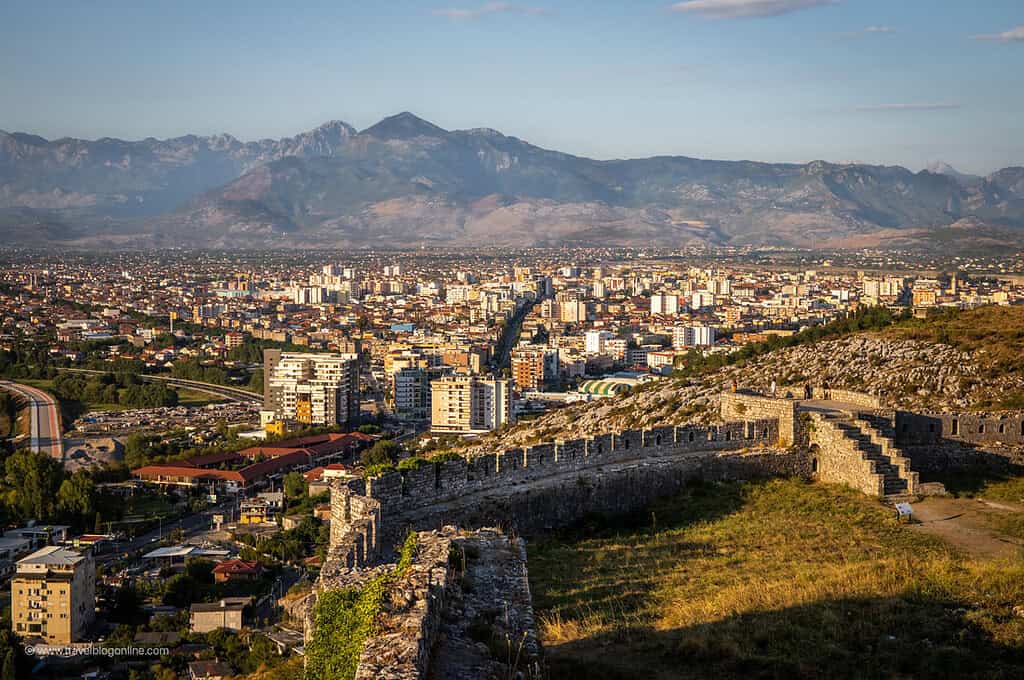
You’ll also see the city written as Shkodra or Shkoder. It’s the same place.
Things to Do in Shkoder at a Glance
| What to visit | Time needed | Cost |
|---|---|---|
| Kasteel Rozafa | 1 to 1.5 hours | A few hundred lek |
| Marubi National Museum of Photography | 1 hour | Around 700 lek |
| Site of Witness and Memory | 1 hour | Small entry fee |
| The pedestrian street (Pedonalja) | An evening | Gratis |
| Lake Shkoder and Shiroka by bike | Half a day | Bike rental, a few euros a day |
| Mesi Bridge | 1 to 2 hours | Gratis |
| Shala River and Komani Lake | Full day tour | €40 with bus and boat included |
| Theth | Full day, better overnight | Minibus, roughly €10 to €15 each way |
Prices change from season to season, so treat these as a rough guide. Museums and the castle take cash in Albanian lek, so carry some.
Things to Do in the City
1. Climb Rozafa Castle Before Sunset
If you only do one thing in Shkoder, make it this one. Rozafa Castle sits on a rocky hill about 3 kilometres from the centre, at the point where the Buna and Drin rivers meet. From the walls you get Lake Shkoder on one side, the rivers below you, and the mountains to the north. It is most definitely the best view in the city.
The castle comes with a grim legend. Three brothers were building the walls, and every night the day’s work collapsed. They were told the walls would only stand if one of their wives was built into them. The youngest brother’s wife, Rozafa, accepted on one condition: that they leave openings so she could still nurse and rock her baby son.
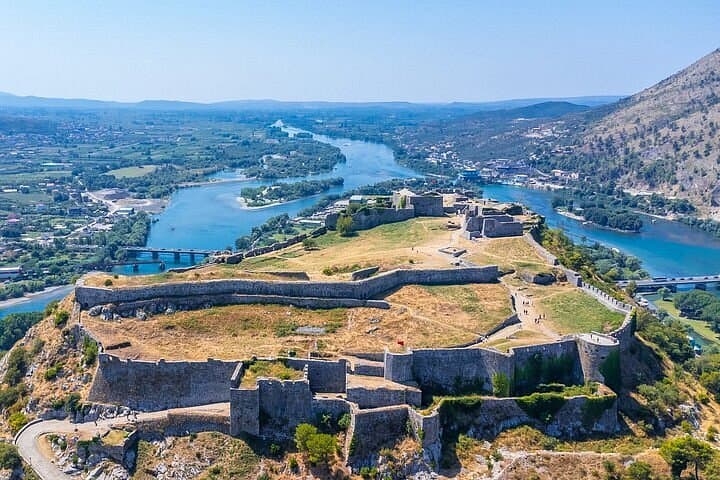
A taxi from the centre takes about 10 minutes and a bike about 15. On foot it’s 40 to 45 minutes, plus a 10 to 15 minute climb on cobbles that have been polished smooth, so wear shoes with grip. Entry is a few hundred lek in cash, and the small museum inside costs a little extra. Give it 60 to 90 minutes and aim for the last hour before sunset. Opening hours are long in summer and shorter in winter, so ask at your hotel before you go late in the day.
2. Stop at the Lead Mosque Below the Castle
You’ll spot it from the castle walls: a stone mosque standing alone in a meadow at the foot of the hill. The Lead Mosque was built in 1773 and takes its name from the lead that once covered its domes. In November 1990 it hosted the first public Muslim service in Albania after decades in which religion was banned.
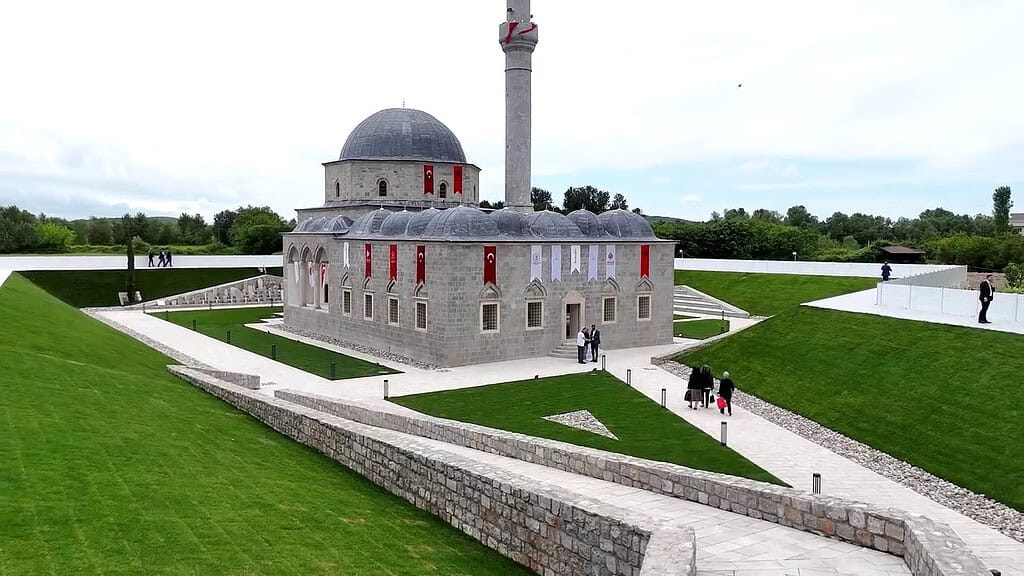
It takes fifteen minutes to see, and it only makes sense combined with the castle. The meadow around it floods after heavy rain, so in spring you may only be able to look from the road.
3. See Albania in Photographs at the Marubi Museum
This is the museum people expect to skip and end up recommending. Pietro Marubi, an Italian who settled in Shkoder in the mid-1800s, opened what became the first photography studio in the country. Three generations later the archive holds close to half a million negatives: highland clans in full dress, city merchants, weddings, kings, and ordinary street scenes from a century and a half of Albanian life.
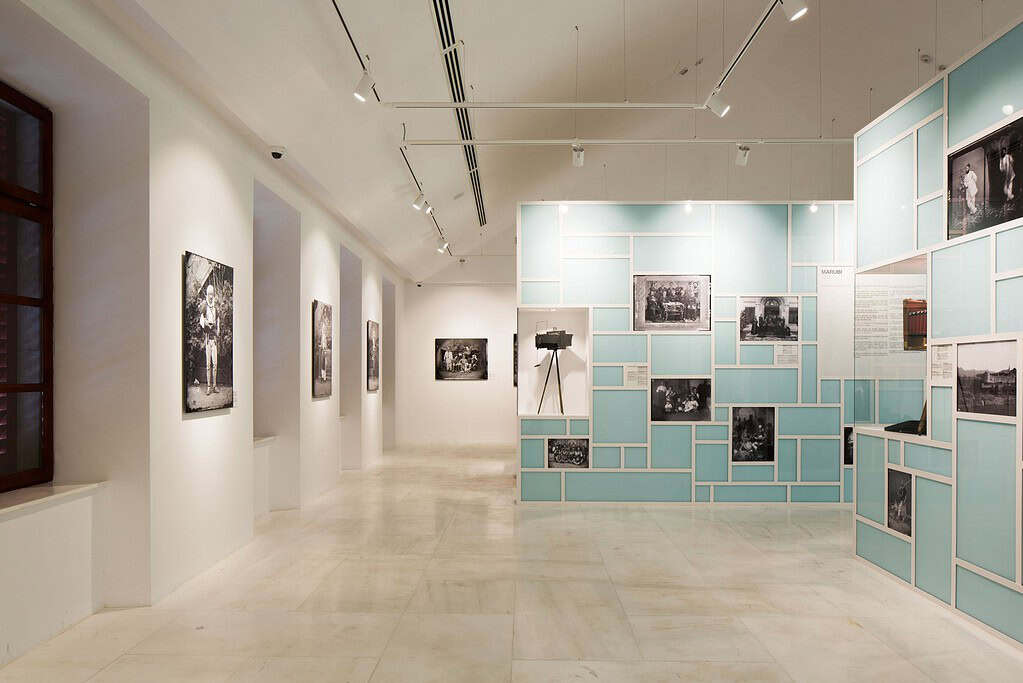
You’ll find it at number 32 on the pedestrian street, Rruga ‘Kolë Idromeno’. It is open every day from 9:00 to 19:00, tickets are around 700 lek, and children under 12 go in free. Payment is cash only, in lek currency. An hour of visit is probably enough.
4. Walk the Pedonalja in the Evening
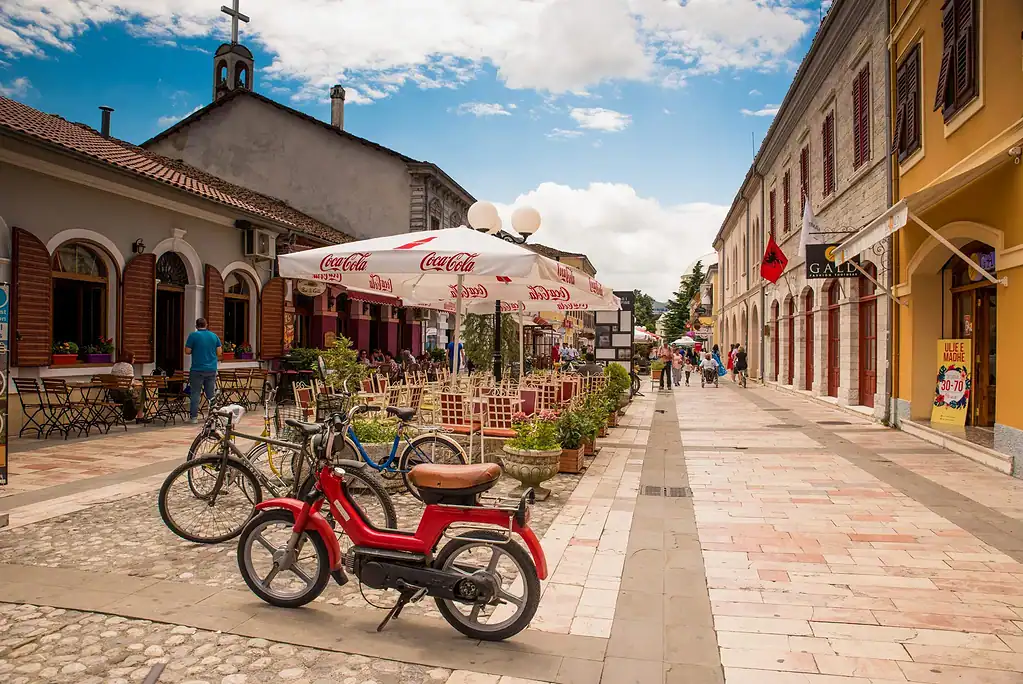
Rruga ‘Kolë Idromeno’, known to everyone as the “Pedonalja”, is the pedestrian street through the old centre. By day it’s pleasant. In the evening it’s the reason to be in Shkoder. Around 6 PM, the whole city comes out for the “xhiro“, the evening walk, and the street fills with families, teenagers and grandparents doing slow laps between the cafés.
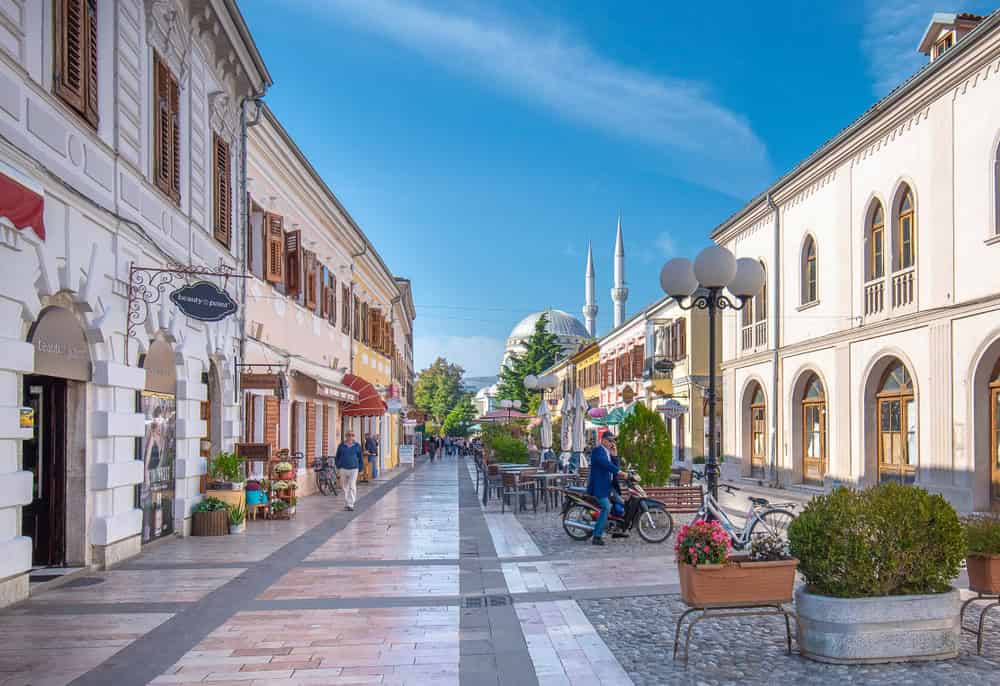
There’s nothing to buy a ticket for. Get a table outside, order a coffee or a drink, and just watch. If you want a second street, Rruga 28 Nëntori runs off it and has more of the old shopfronts.
5. Visit a Mosque, a Catholic Cathedral and an Orthodox Church in Ten Minutes
Shkoder has long been the centre of Catholic life in Albania, and it has large Muslim and Orthodox communities too. You can see all three within a short walk in the centre: the Ebu Bekr Mosque, St Stephen’s Catholic Cathedral, and the Orthodox Cathedral.
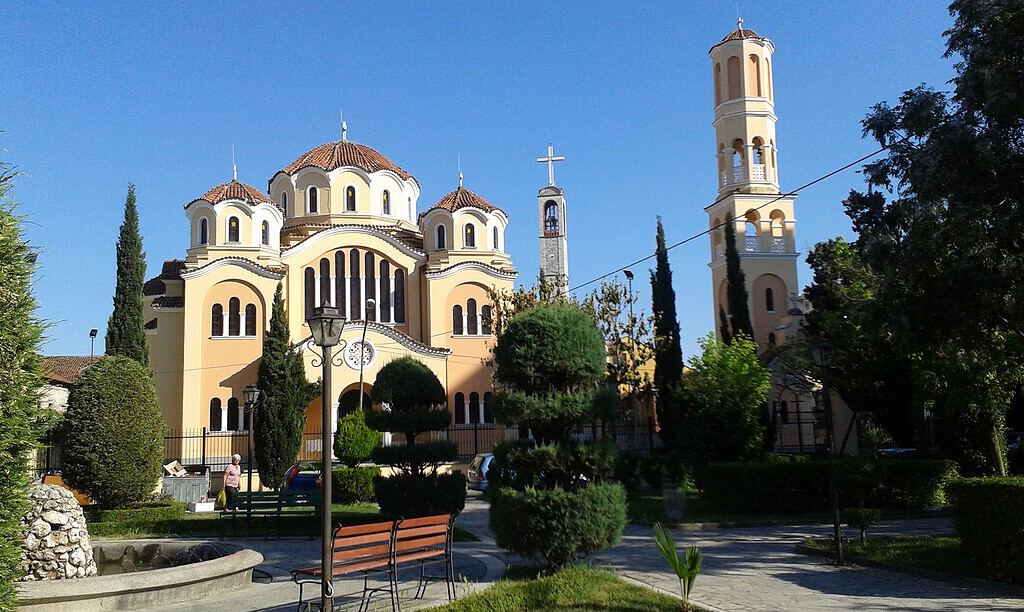
None of them takes long, and they’re all free to enter outside prayer times. Be respectful and follow the proper ettiquete (cover your shoulders and knees), and take your shoes off at the mosque.
6. Spend an Hour at the Site of Witness and Memory
This one is not easy, but it’s worth doing anyway. The building was used by the communist-era secret police as a detention and interrogation centre, and the cells have been kept as they were. The exhibition upstairs tells the stories of people from Shkoder who were held here, many of them priests and teachers.
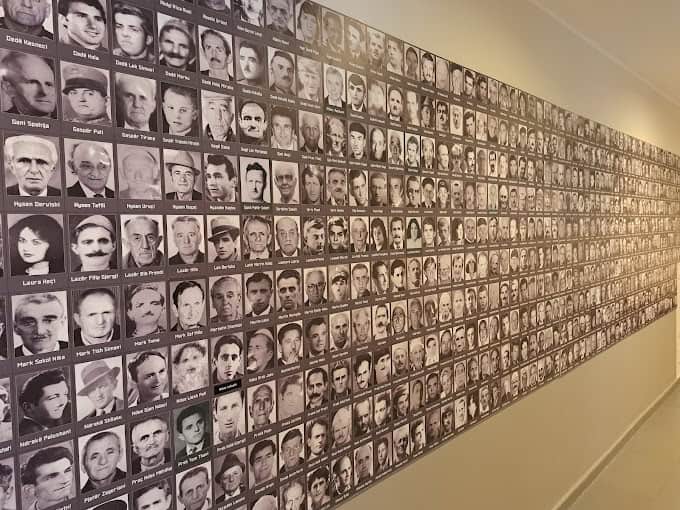
There’s a small entry fee and a visit takes about an hour. It gives you context for everything else you’ll see in Albania, including the bunkers you’ll pass on the road north.
By Bike and by the Lake
7. Rent a Bike and Ride Like a Local
Shkoder is the cycling city of Albania. It’s flat, the distances are short, and you’ll see everyone from schoolkids to men in suits pedalling through the centre. Join them! Most guesthouses and hostels rent bikes for a few euros a day, and it turns the castle, the lake and Mesi Bridge from taxi trips into an easy day out.
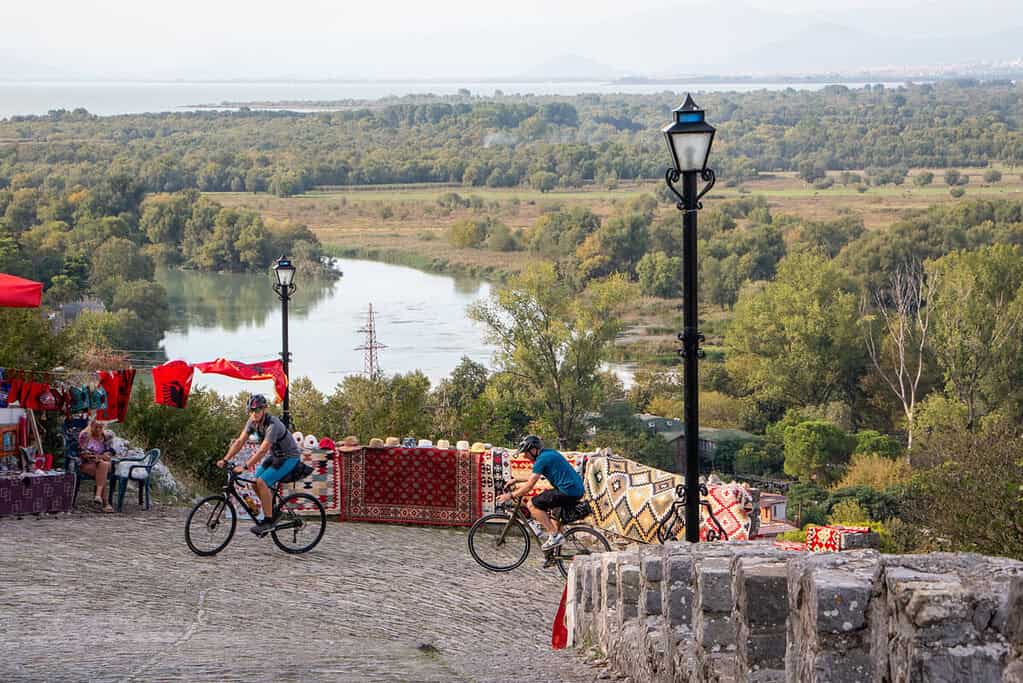
Traffic in the centre is slow and drivers are used to bikes. On the roads out of town, keep to the edge and take your time.
8. Swim and Eat Fish at Lake Shkoder
Lake Shkoder is the largest lake in the Balkans, and Albania shares it with Montenegro. The closest place to enjoy it is Shiroka, a village on the shore about 45 minutes from the centre by bike. There’s a public beach, you can rent a kayak or a paddleboard, and by July the water is warm enough to stay in for as long as you like.
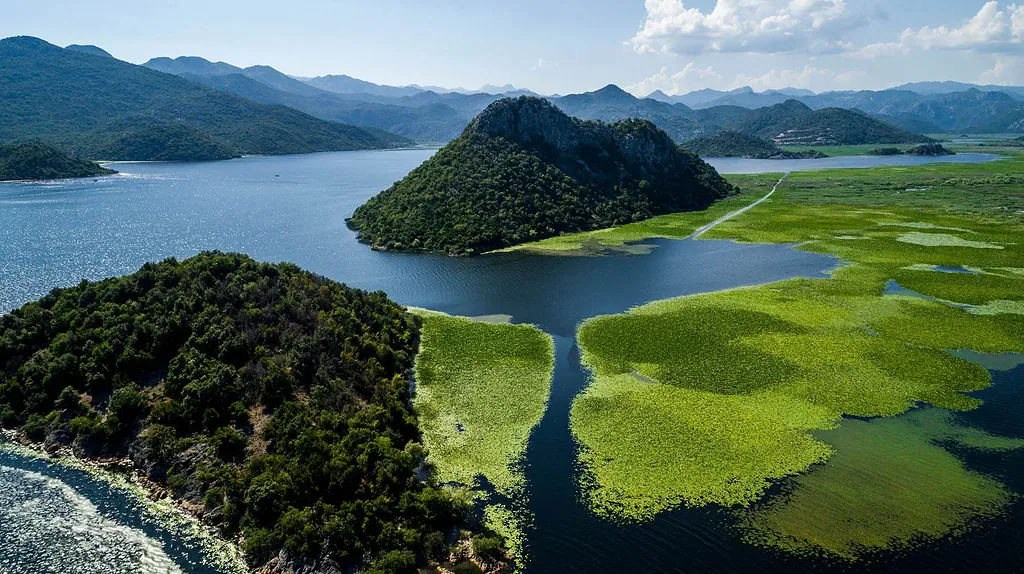
Keep going along the same road and you reach Zogaj, the last village before the border. It’s quieter, the road gets narrower, and the views across the water to the mountains are better. Both villages have fish restaurants on the shore, which brings us to lunch (see number 11).
9. Cycle Out to Mesi Bridge
A few kilometres north-east of the city, in the village of Mes, an Ottoman stone bridge crosses the Kir river. Mesi Bridge was built around 1770, runs 108 metres and has 13 arches, with one big one in the middle. It’s one of the longest bridges of its kind in the region and still looks much as it did when traders used it to reach the mountains.
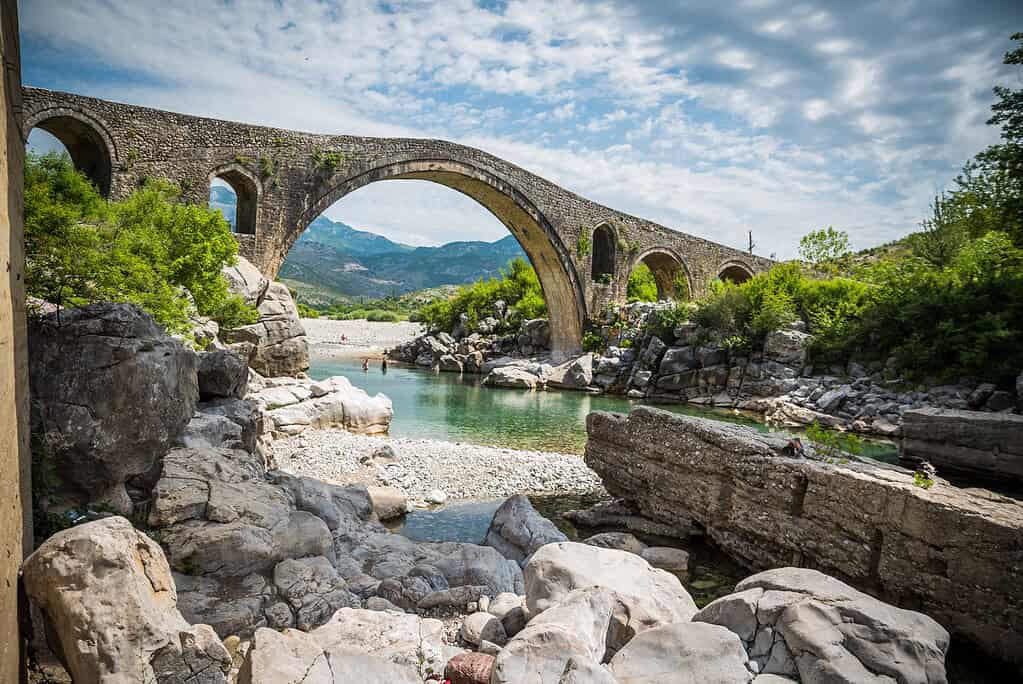
You can’t drive over it, and you only need half an hour there. In summer the river runs low and people swim in the pools underneath. Go by bike or taxi, and go in the morning or late afternoon when the light is on the stone.
10. Look Inside the Venice Art Mask Factory
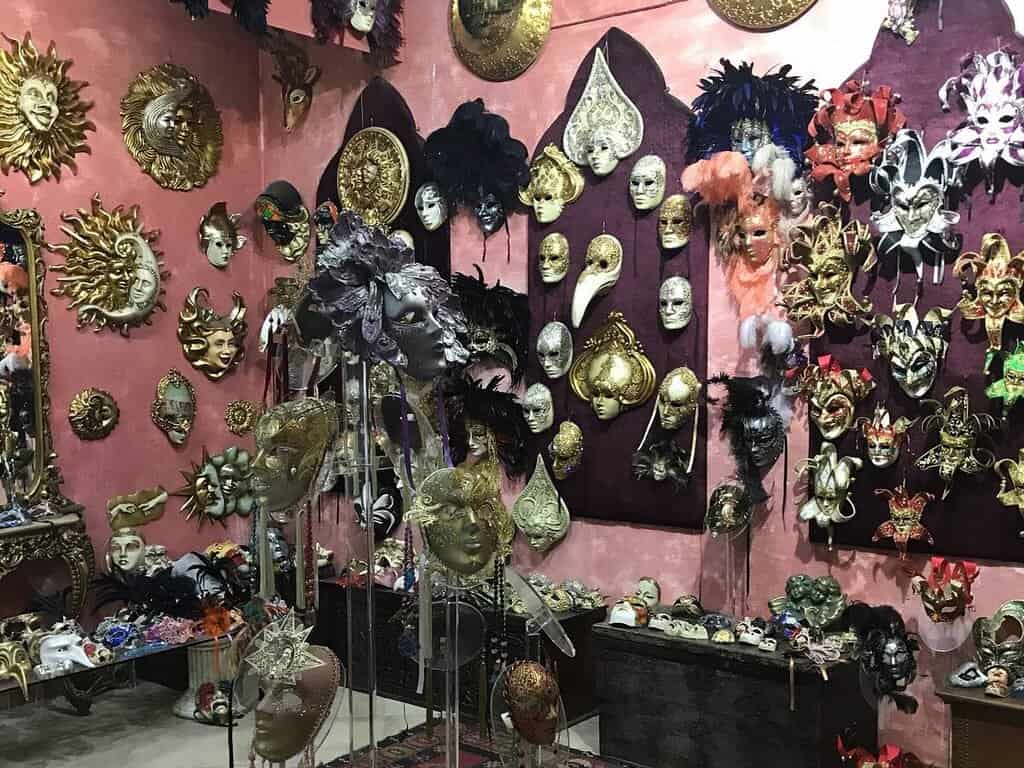
This is the odd one on the list. A workshop on the edge of Shkoder makes carnival masks by hand, thousands of them a year, and most end up in Venice. You can walk through the showroom, which is wall after wall of feathers, gold leaf and porcelain faces, and see how they’re made.
Half an hour is plenty of visit time. It’s a good filler for a hot afternoon or a rainy one.
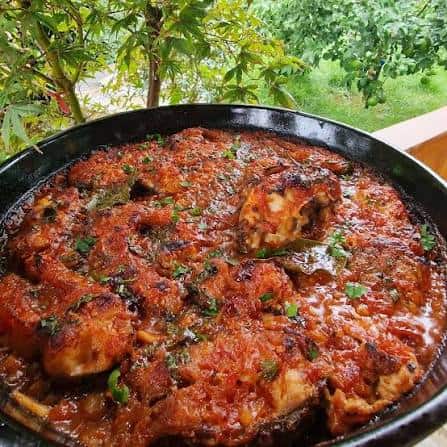
11. Order Tavë Krapi
Every Albanian city has its signature dish, and Shkoder’s is “tavë krapi“: carp from the lake, baked in a clay dish with onions, tomato and, in the traditional version, dried plums. It’s rich, slightly sweet, and nothing like the grilled fish you’ll get on the coast.
The best place to try it is by the lake in Shiroka or Zogaj, where the carp comes out of the water in front of you. Ask how long it will take when you order. A proper one is baked to order and can take a while.
Day Trips from Shkoder
12. Take the Boat to Shala River
We’re biased here, because this is the trip we run every day from mid-April to mid-October. It is also the reason a lot of people come to Shkoder in the first place, so it would be strange to leave it out.
The day goes like this. You check in at 6:30 am near Sheshi Demokracia in the city centre, and the bus leaves at 6:45. By 9:00 you’re at Komani Lake, and at 9:30 the boat sets off through the canyon. The crossing takes about 45 minutes, with rock walls rising straight out of emerald water on both sides. Then the lake opens into Shala-rivier, where the water turns a turquoise that looks edited in photos, althought it isn’t.
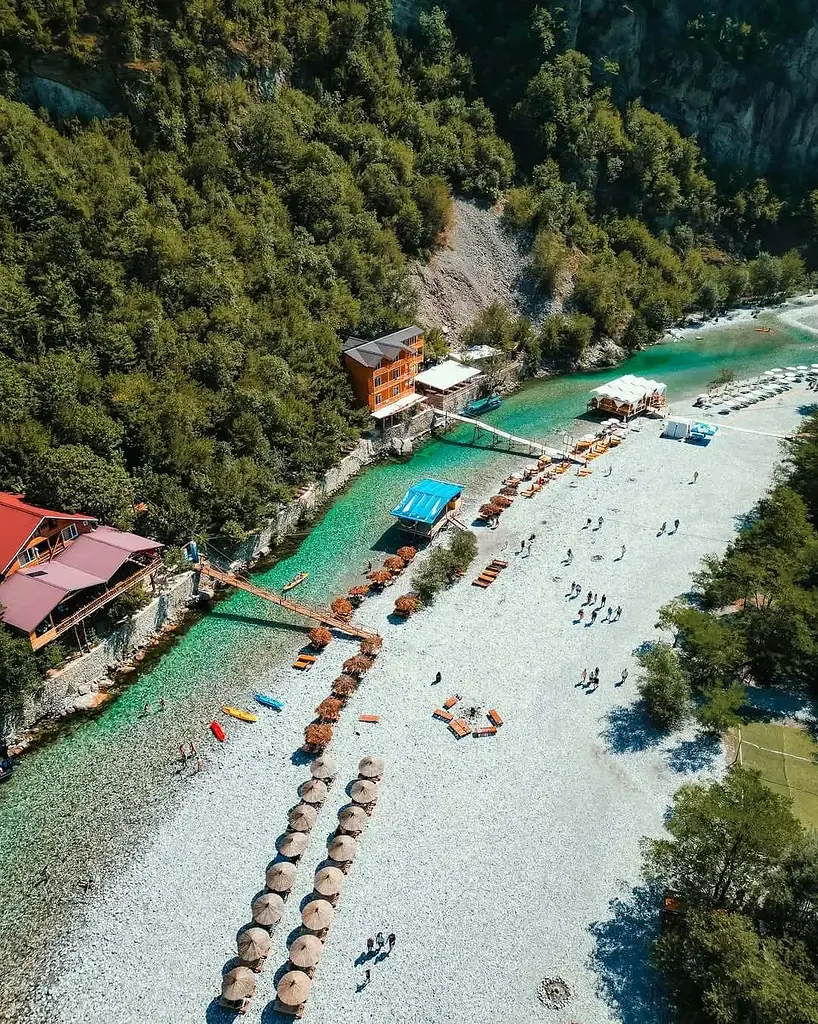
You get 4.5 to 5 hours there to swim, kayak, eat lunch by the water or just enjoy the nature and landscape. The boat leaves at 3:00 pm and you’re back in Shkoder around 5:00 pm, in time for the evening walk on the Pedonalja.
De Shkoder to Shala River day tour costs €40 per person with the bus and boat included. Lunch isn’t included, and the restaurants at the river only take cash. Boats run from mid-April to mid-October. For the full picture, read our guide to getting from Shkoder to Shala River and Komani Lake.
13. Go Up to Theth
Theth is a village high in the Albanian Alps, surrounded by peaks, with stone houses, a small church in a meadow that ends up on every postcard, and walking trails to a waterfall and a spring-fed pool called the Blue Eye. Minibuses leave Shkoder early in the morning, take 2.5 to 3 hours, and cost roughly €10 to €15 each way.
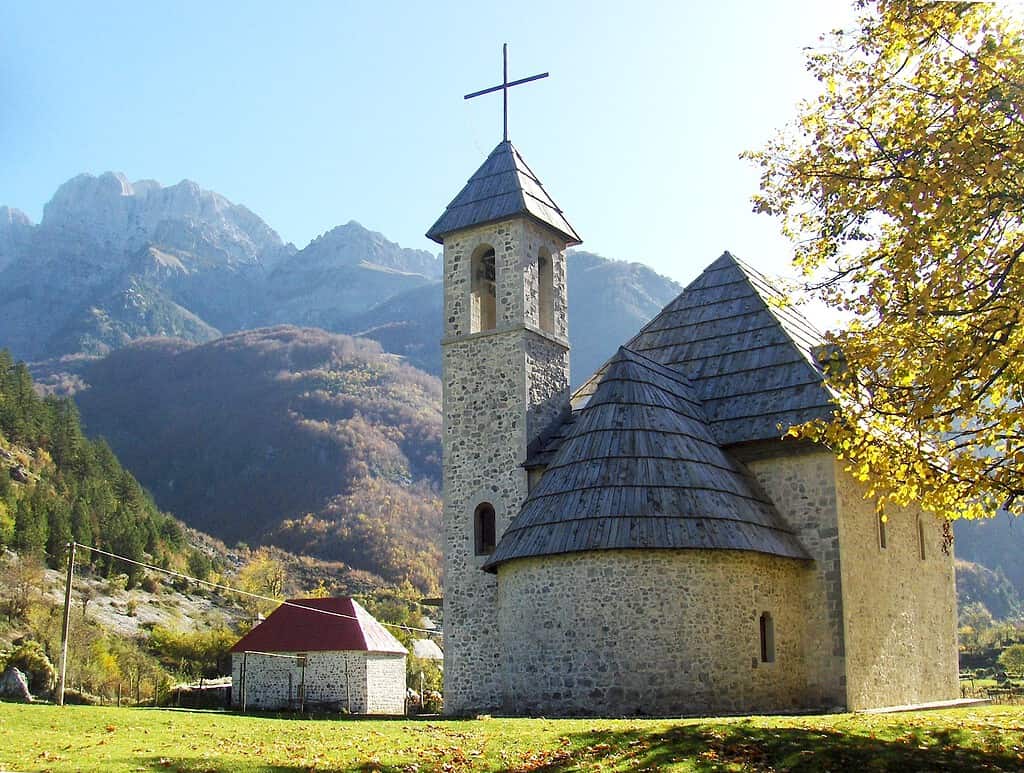
You can do it as a day trip, but honestly, don’t. Most of the day goes on the road, and Theth is at its best in the evening and early morning when the day visitors have gone. Stay at least one night in a guesthouse. Our Albanian Alps travel guide covers how to plan it.
14. Spend a Day at Velipoja Beach
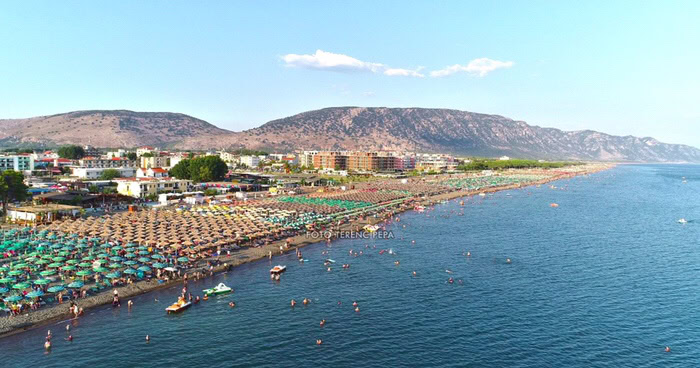
Shkoder isn’t on the sea, but the Adriatic is very close. Velipoja is a long, wide, sandy beach about 30 kilometres away, where the Buna river reaches the coast. It’s where Shkoder goes in summer, so in July and August it’s busy and loud and very local.
Go outside those two months, or on a weekday, and you’ll have plenty of space. Buses and minibuses run from the city through the season.
How Many Days Do You Need in Shkoder?
Two nights is the minimum that makes sense, and three is better. One day covers the city. The second goes to Shala River. A third lets you take the bike out to the lake and Mesi Bridge without watching the clock.
A plan that works for most people:
- Dag 1: Marubi Museum and the Site of Witness and Memory in the morning, Rozafa Castle for sunset, dinner and the evening walk on the Pedonalja
- Dag 2: Shala River and Komani Lake, back by 5:00 pm
- Dag 3: Rent a bike, ride to Shiroka for a swim and a fish lunch, stop at Mesi Bridge on the way back
If you’re heading to Theth afterwards, leave on the morning of day 4 and take your time up there.
How to Get to Shkoder
From Tirana, buses run through the day and take about 2 hours. A ticket costs a few hundred lek. If you’re landing at Tirana Airport and going straight north, there are direct minivans that get you to Shkoder in under 2 hours without going into the capital.
From Montenegro, Shkoder is the first city across the border. Podgorica is about an hour and twenty minutes away by car.
If you’re staying in Tirana and only want the boat trip, you don’t have to move at all. We run the same tour with pickup in the capital, and it’s one of the best day trips from Tirana.
When Is the Best Time to Visit Shkoder?
May, June and September are the sweet spot. The city is warm without being exhausting, the lake is swimmable, and the boats to Shala River are running. July and August are hot, often well over 30°C in the afternoon, so do the castle and the bike rides early or late and keep the middle of the day for the lake or a museum.
From November to March Shkoder is quiet and often rainy. The museums and the castle are open, but the boats don’t run and Theth can be cut off by snow.
Veelgestelde vragen
Yes. It has the best castle view in northern Albania, one of the most interesting museums in the country, a lake you can swim in, and an evening street life most cities have lost. It’s also the starting point for Shala River and the Albanian Alps, so a night or two here fits into almost any northern route.
Two nights at least: one day for the city and one for the boat trip to Shala River. Add a third day if you want to cycle to the lake and Mesi Bridge.
Yes. The usual spot is the public beach at Shiroka, about 45 minutes from the centre by bike. The water is warm from June to September.
The Komani Lake terminal is about 70 kilometres from Shkoder, a little over 2 hours by road. From there the boat takes 45 minutes to reach Shala River. On a day tour you leave Shkoder at 6:45 am and return around 5:00 pm.
The centre is flat and compact, and everything in it is within a 15 minute walk. For the castle, the lake and Mesi Bridge you’ll want a bike or a taxi.
Tavë krapi, a baked carp dish made with fish from the lake. Try it at one of the lakeside restaurants in Shiroka or Zogaj.
Plan Your Day at Shala River from Shkoder
If Shkoder is on your route, leave one day free for the lake and the river. We pick up in the city centre every morning from mid-April to mid-October, and the whole day costs €40 with the bus and boat included. If you’re starting from somewhere else, see all our tours.
Boek de Shkoder naar Shala Rivier Dagtocht